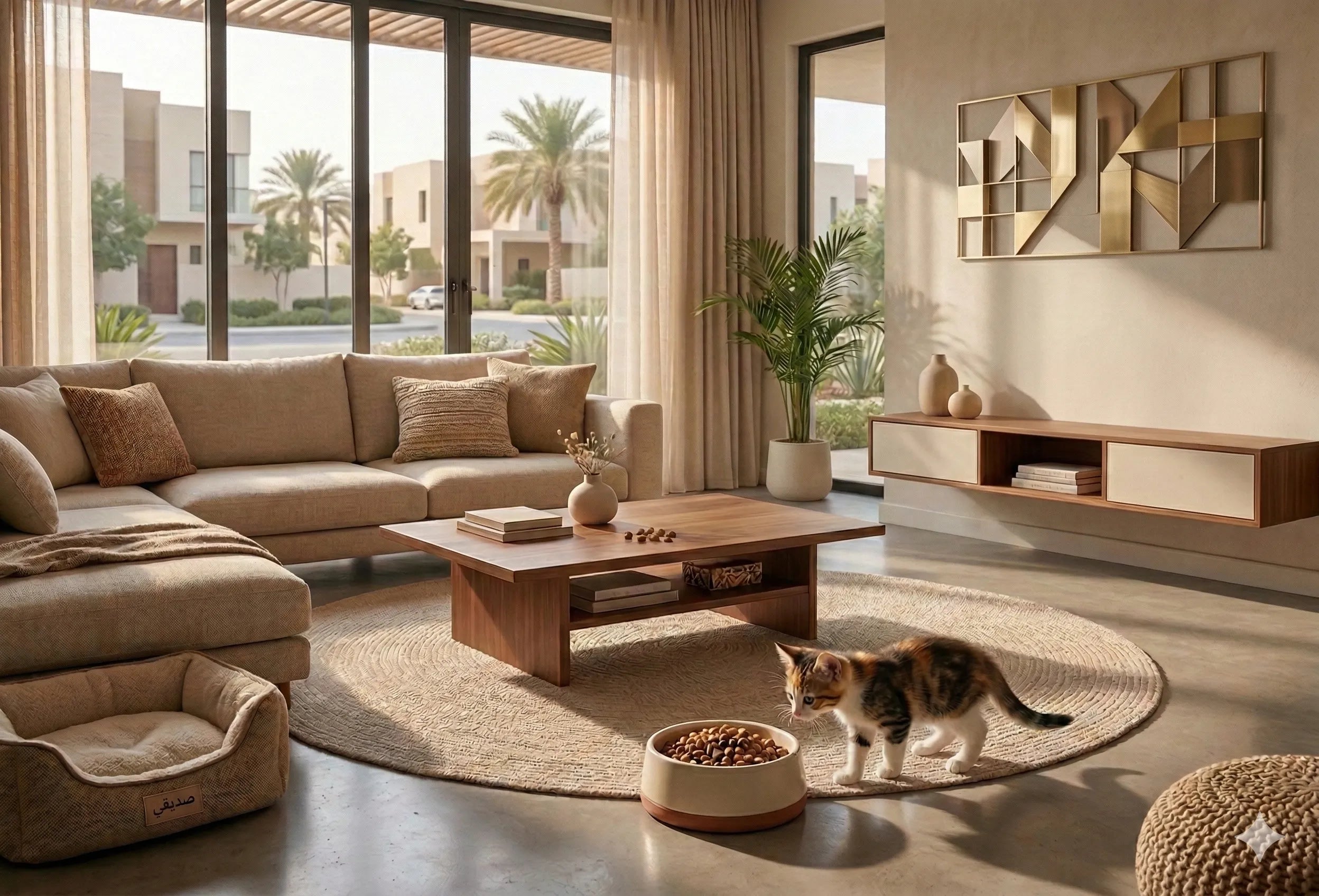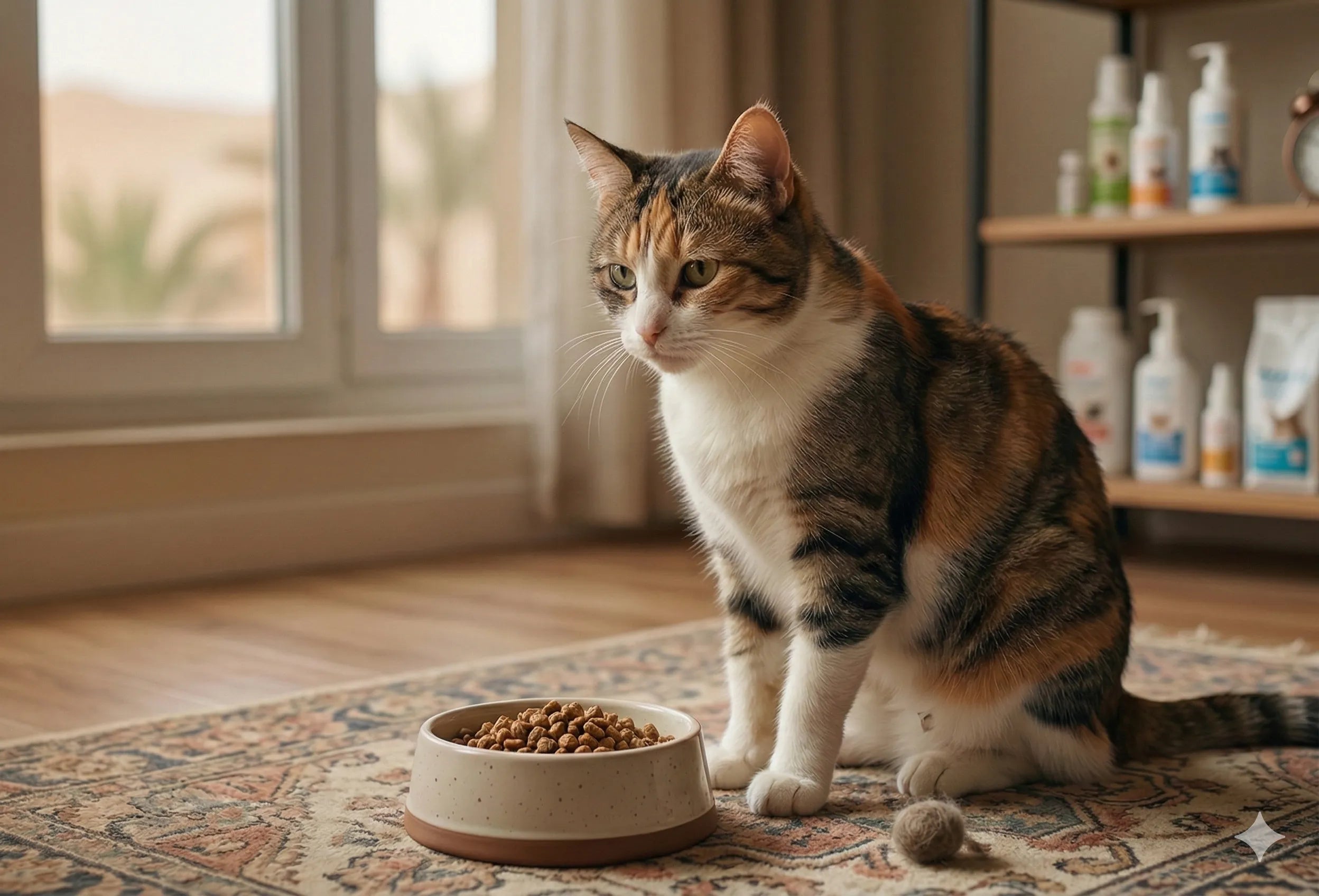
Best Food for Indoor Cats in Saudi Arabia
“Am I feeding my indoor cat the right food?”
This is one of the most common questions among cat owners in Saudi Arabia.
Indoor cats live differently. They move less. They stay in air-conditioned homes. They spend most of their time in apartments. That changes their nutritional needs.
If your cat lives fully indoors, choosing the right food matters more than many owners realize.
Why Indoor Cats in Saudi Arabia Need Different Nutrition
Most indoor cats in Riyadh, Jeddah, and other Saudi cities:
-
Live in apartments
-
Spend long hours in AC environments
-
Have limited physical activity
-
Are sterilized
-
Experience extreme seasonal heat outside, even if indoors
Because of this lifestyle, indoor cats are more prone to:
-
Gradual weight gain
-
Mild dehydration
-
Hairball buildup
-
Digestive sensitivity
The right food helps prevent these issues before they start.
What Makes a Good Indoor Cat Food?
When choosing food for an indoor cat in Saudi Arabia, focus on four key factors.
1) Moderate Calorie Density
Indoor cats burn fewer calories than outdoor cats.
Look for formulas labeled:
-
Indoor
-
Sterilized
-
Weight control
These formulas are usually slightly lower in fat while still maintaining proper protein levels.
Many Saudi owners choose indoor-specific recipes from brands such as Purina Pro Plan, Hill’s Science Plan, Carnilove, and Acana.
You can explore available options here:
https://sadeeqy.com/collections/cats-food-treats
2) High-Quality Animal Protein
Cats are obligate carnivores. Their primary nutrition must come from animal protein.
Common high-quality protein sources include:
-
Chicken
-
Turkey
-
Fish
-
Lamb
As a general guideline, adult indoor cats benefit from approximately 30–35% protein, depending on the formula.
The source and quality of protein matter more than marketing claims.
3) Fiber for Hairball Control
Indoor cats groom frequently.
More grooming means more swallowed hair. Over time, this can lead to vomiting and digestive discomfort.
Indoor formulas often include added natural fibers that help move hair safely through the digestive system.
4) Moisture Support in a Dry Climate
Saudi Arabia has a naturally dry climate.
Even though cats live in air-conditioned homes, dehydration can still be a concern. In cities like Riyadh, summer temperatures exceed 45°C. Water can warm quickly, and some cats drink less than expected.
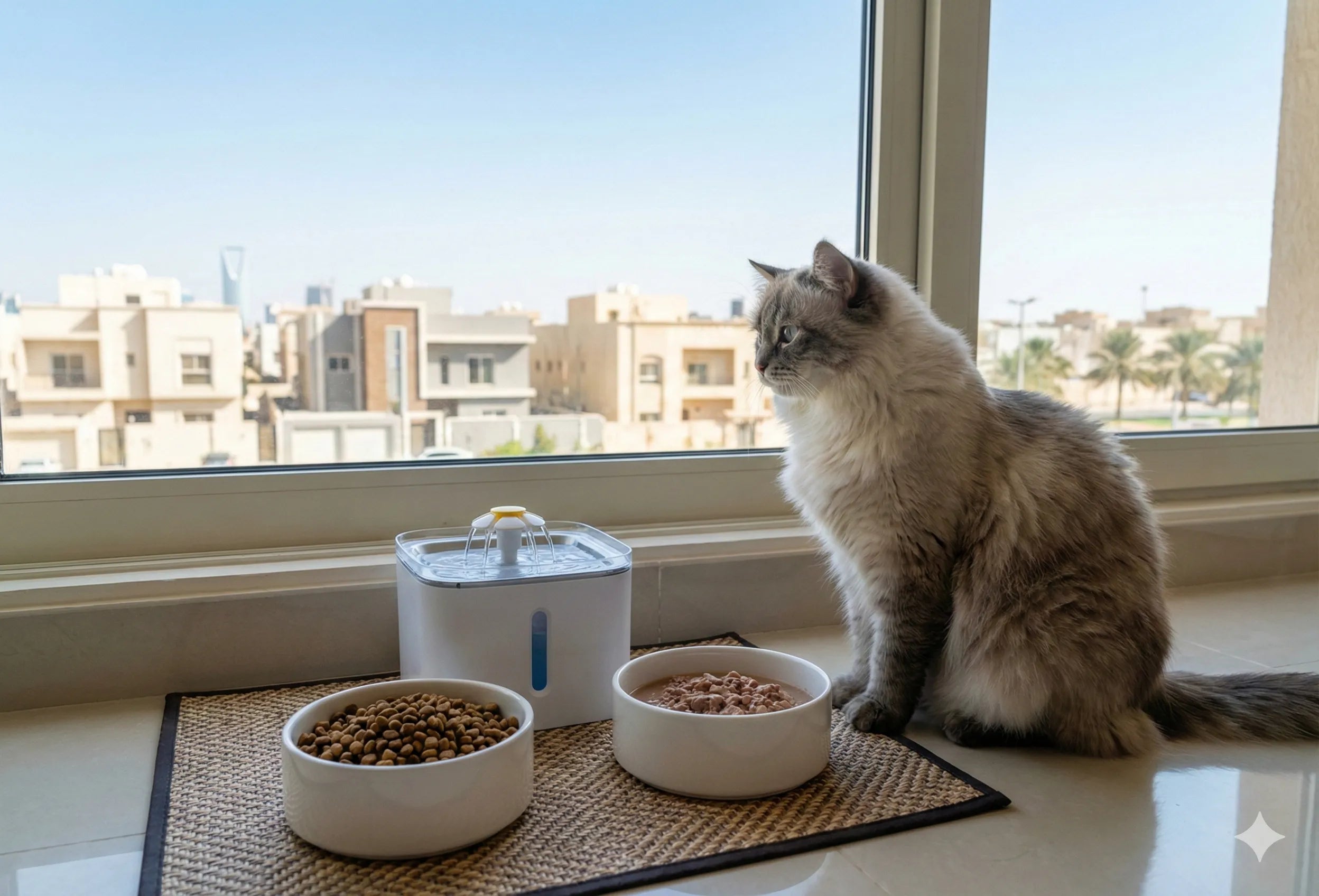
For this reason, many owners combine:
-
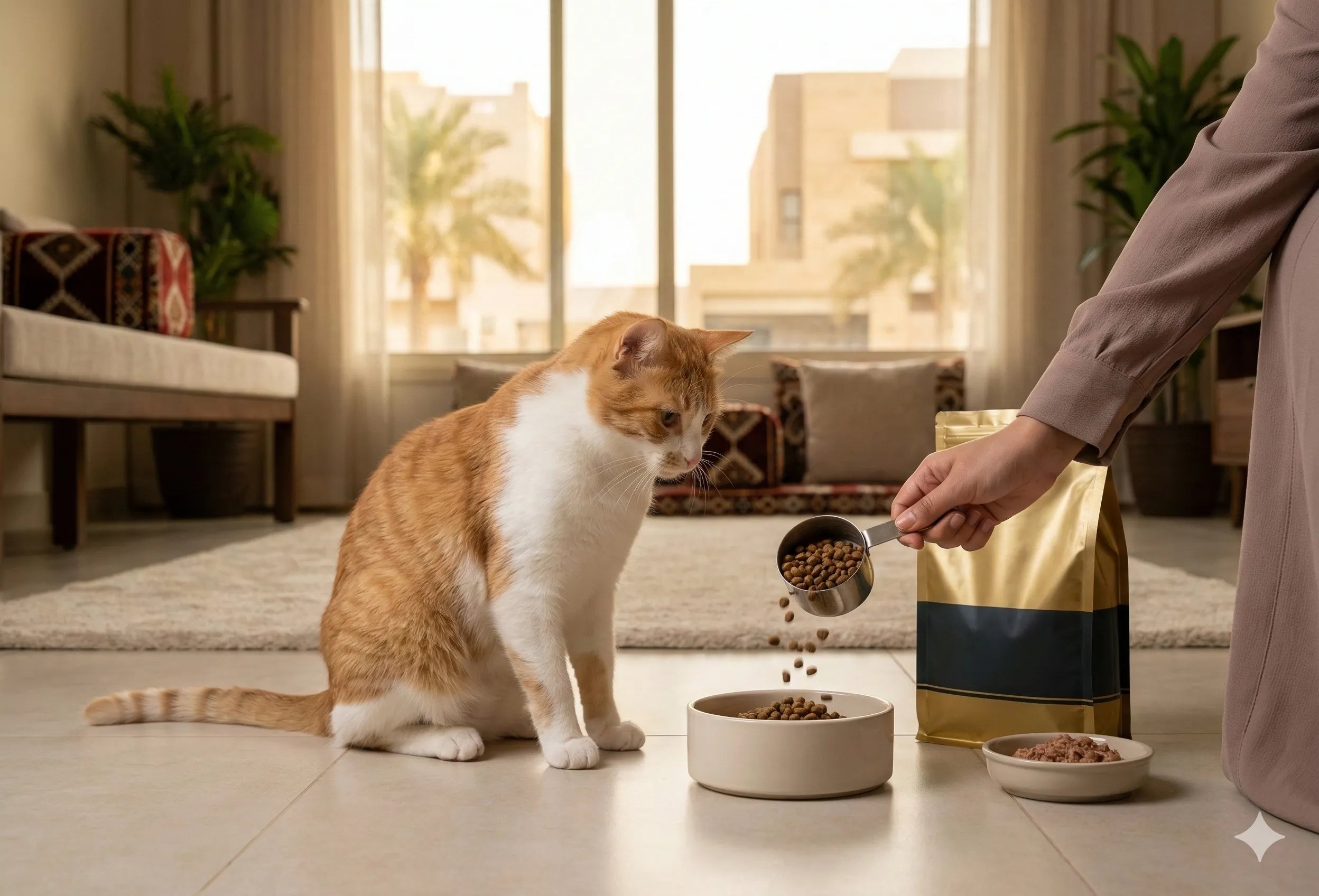
Measured dry food
-
Wet food several times per week
Wet food supports hydration and urinary health.
Wet food options:
https://sadeeqy.com/collections/cats-wet-food
Dry food options:
https://sadeeqy.com/collections/cats-dry-food
A mixed feeding approach is common among indoor cat owners.
Dry vs Wet Food for Indoor Cats
There is no single “best” option. The right choice depends on your cat.
Dry food advantages:
-
Easier storage
-
More cost-effective
-
Convenient for working owners
-
Simple portion control
Wet food advantages:
-
Higher moisture content
-
Often more palatable
-
Helpful during hotter months
-
Supports urinary health
Many owners use both.
Indoor Cat Food vs Regular Adult Cat Food
Indoor formulas are designed differently.
They usually:
-
Contain slightly fewer calories
-
Include added fiber for hairball control
-
Support weight management
Regular adult formulas may be:
-
Higher in calories
-
Designed for more active cats
-
Less focused on indoor lifestyle needs
For apartment cats in Saudi Arabia, indoor formulas are often preferred.
Should Indoor Cats Eat Grain-Free Food?
Grain-free diets are sometimes chosen when:
-
A cat shows digestive sensitivity
-
There are suspected food intolerances
-
Owners prefer limited-ingredient formulas
However, grains themselves are not automatically harmful. Overall ingredient quality and protein source are more important.
What About Indoor Kittens?
Kittens grow rapidly during their first 6–12 months.
They require:
-
Higher protein
-
Higher fat
-
DHA for brain development
Indoor kittens should not be placed on adult weight-control formulas.
You can explore age-appropriate options here:
https://sadeeqy.com/collections/kitten-essentials
Signs Your Cat’s Food May Not Be Suitable
Watch for:
-
Gradual weight gain
-
Dull coat
-
Frequent vomiting
-
Soft stool
-
Low energy
-
Stronger litter odor
Food adjustments often improve these signs before they become serious problems.
How to Choose the Right Indoor Cat Food
Before making a decision, ask:
-
Is my cat sterilized or neutered?
-
Is my cat gaining weight?
-
Does my cat drink enough water?
-
Does my cat have digestive sensitivity?
Answering these questions makes the choice clearer.
Practical Feeding Strategy for Saudi Homes
A simple approach for indoor cats:
-
Measure dry food portions instead of free feeding
-
Add wet meals several times per week
-
Replace water daily
-
Monitor weight monthly
Small adjustments prevent long-term health issues.
Final Reassurance
You do not need a perfect system on day one.
Start with:
-
Age-appropriate food
-
Measured portions
-
Hydration awareness
Most indoor cats thrive when these basics are covered.